ספרים אשר עוסקים בסובלנות יכולים להוות השראה ופתח לשיחה על המפגש עם מי ששונים מאתנו בדעותיהם, אמונותיהם או במנהגים שלהם. הספרים שלפניכם מעודדים את מציאת המשותף, ומסייעים בפיתוח היכולת לקבל ולכבד את האחר כשווה לנו, גם אם אינו דומה לנו.
Gali and Gaya love doing stuff together, but also separately. You may want to discuss and discover what your toddlers like to do together with a sibling, friend or you, their parents, and what they prefer doing on their own.
Would you like to play with Gali and Gaya, and dramatize the story? Please scan the QR code, print out two adorable ducks, cut them out, and act the story out with them…!
Like Gali and Gaya, you too could walk together. How about making a trail at home, and marking it with a piece of rope or various items. Next, walk along it in single file, one behind the other, or perhaps together, side by side. You can also take turns being in the lead and exclaiming: “Follow me!”
A sheep, frog or butterfly? You may enjoy looking at the illustrations in this book together, and discovering the various animals. You could make the sound that each oft them makes, or move like them: Flying like a butterfly, buzzing like a bee, or… What else?
All houses consist of walls, a roof, doors and windows: What’s special about your house? What makes it your home? You may want to discuss special objects and items found in your home, or the things you do there together.
How about making a house out of blankets, cardboard boxes, sticks and clothespins? And what else would you need? Decide on a location and workplan, gather the necessary items and accessories, and off you go!
Take turns announcing a topic and having all the other players try to work together to find a suitable item. For instance, when “red” is announced, all players must search the house for a red item. In the next round, another player might call out “big”, “small”, “cute”, “old”, “multicolored”, “annoying” or “wheel”, sending the other players to look for an item matching their announced topic.
Have you ever wanted to do something and had someone interrupt you? how did it make you feel? What did you do and say? This book offers the opportunity to discuss these kinds of situations, as well as some good-spirited solutions.
Someone snatched something from me, took something I wanted, interrupted me, bothered me – what do I do? You could think of positive responses together, like using the word “please”, or explaining what bothered you. How about making a paper die and writing all kinds of positive responses on each side, perhaps adding an illustration that depicts the written text? That way, whenever you come up against a problem, you could always throw the die and see what it suggests that you do in response.
Various animals appear in this book: Which one meows? Which one lays eggs? And which one lives in the shed? Let’s find out! One of the players picks an animal, and the rest of the family has to guess which animal they picked by posing questions, and getting hints, such as “the animal I picked meows”, “the animal I picked lives in a pen”. Keep adding more clues until your family has guessed which animal was chosen.
You could act the story out using clothes, hats, accessories, or stuffed animals. You could make the sounds made by the animals, show how each one responds upon encountering the elephant, or be the elephant sleeping on the path.
You may want to snuggle up and look through the book together. Ask your child some of the following questions: did any of the illustrations make you smile or sad? Are you familiar with all the animals in the book? Do you think they all make suitable pets? Try to imagine being able to have an unusual pet: which one would you choose?
We suggest taking a moment at the page on which the boy and his tiny elephant reach the pet club, and reading the sign out loud. You could discuss what, in your opinion, is the reason why elephants are not allowed into the club. How does that make the boy and his tiny elephant feel? Before you go on reading, you could perhaps hazard a guess as to what the boy would do next.
How about making a model pet club from a shoebox, and acting the story out together using some puppets. You could enhance the story by making up conversations between characters.
“Because that’s what friends do” – you may want to share a special friendship you had during your childhood with your child. What did you enjoy doing together? Which games did you play? Who are your child’s friends, and how do they like to spend their time together? Is there a boy or girl from kindergarten who has never been round to your house? Perhaps you could have a gathering of friends of all ages – because all are welcome to the family club!
You may enjoy making a sign for your child’s bedroom together, and writing a welcoming greeting on it, such as “all are welcome here”, or “welcome, one and all”.
The story of the three butterflies was first published in 1938, and has since accompanied many generations of Israeli children. Do you know of an earlier version of the book containing other illustrations? You may want to take a look together at Orit Bergman’s illustrations. Have you noticed that the butterflies’ wings are multicolored? You may like to consider why the illustrator chose to paint the butterflies this way.
The three butterflies look out for one another and refuse to be separated. You may want to discuss friendship and mutual obligation together, be it between friends or family members. Perhaps you’d like to share stories about your friends and your child’s, and the things you enjoy doing together. Following the story, you might want to ask your child if they or their friend had ever been prevented from joining in a game, how that made them feel and what they did in response.
The flowers are only willing to allow those who are of a similar color in. You may want to compare the illustrations of the flowers to those of the butterflies. What similarities and differences can you find between them? You may like to ask your child what they think of the flowers’ behavior.
You may also want to act the story out as a family by dressing up in the colors of the flowers and butterflies. You could also create a puppet theater, with characters for the butterflies and flowers, using popsicle sticks and cellophane.
You might enjoy going outside and looking for butterflies and flowers! Just like in the story, flowers and butterflies in nature differ from one another, each having their own particular color and shape. Have you come across a tulip or lily? How many types of butterflies have you found, and what color were they? Do you happen to know the name of any butterfly? Perhaps you’d like to mimic the way butterflies move, and invent the Butterfly Dance together.
Levin Kipnis wrote hundreds of well-loved children’s poems and stories that form an integral part of Israeli culture. You may wish to look for them at home, in kindergarten, or at the library, and read them together.
Levin Kipnis was one of Hebrew children’s literature’s founding fathers. He wrote and translated many literary pieces for children, and also set up and managed the first children’s theater in Israel. In addition, Kipnis edited numerous journals, anthologies and text books.
He was born in the Ukraine in 1894 and immigrated to what would later become the State of Israel in 1913. He felt there were not enough holiday songs and stories in Hebrew suitable for young children, and proceeded to collaborate with generations of kindergarten teachers in Israel, compiling preschool curricula and authoring hundreds of children’s stories and poems. Among his songs for the Jewish Holidays are: Svivon Sov Sov Sov (“Spin Spin Spin, Dreidel”) for Hanukkah, Ani Purim (“I am Purim”) for Purim, and Saleinu Al Ktefeinu (“Our Baskets are upon our Shoulders”) for Shavuot. His literary pieces contain messages of helping and consideration of others, such as in the famous Eliezer Vehagezer (“Eliezer and the Carrot”), Hamitriya Hagdola shel Abba (“Daddy’s Big Umbrella”), and… Shloshet Haparparim (“The Three Butterflies”).
Levin Kipnis was a particularly prolific author, and won many awards, including the Israel Prize in 1978, and the Hans Christian Andersen Award in 1988. He passed away in 1990.



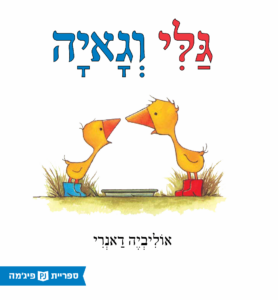 Gali & Gaya (Originally: Gossie & Gertie)
 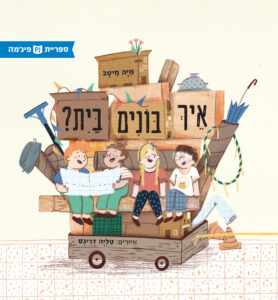 How to Build a House
 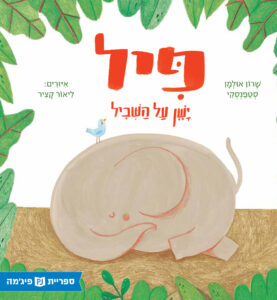 Elephant on the Path
 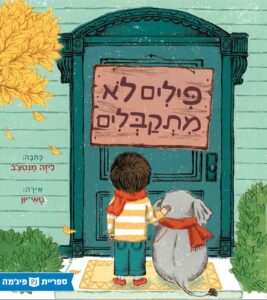 Strictly No Elephants
 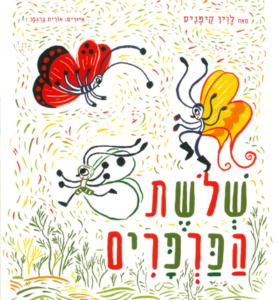 The Three Butterflies