טֶבַע וּסְבִיבָה
עונות השנה
חורף, קיץ, סתיו, אביב... איזו עונה אתם אוהבים?
האם תעדיפו לדלג מעל השלוליות עם מטרייה בגשם? או אולי להביט סביב בפריחה המרהיבה של האביב? אספנו עבורכם מגוון סיפורים על עונות השנה, בעזרתם תוכלו להכיר, לחקור לחוות וליהנות ממאפיינה הייחודיים של כל עונה ומהחוויות השונות שהיא מזמנת.
סְּפָרִים
Book-Related Family Activities
Songs for all Times
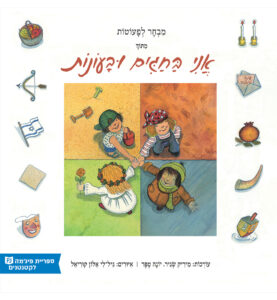
This book is a gift that can accompany you as a family throughout the year: on festive holidays and in changing seasons, with the arrival of Autumn and in preparation for a birthday celebration. Choose the appropriate song for each coming occasion or holiday, read it together, look at the illustrations, sing and celebrate. Poems and illustrations Read the songs together and look at the illustrations. Which illustrations attract the children’s attention?
Songs and Illustrations
Read the songs together and study the illustrations. Which illustrations draw the children’s attention?
You can look together at what you see in the illustration and what details appear in it.
Words and Melodies
Many of the songs in this book were composed to music. You can take a cymbals, wooden spoons or lids of pots and pans, and accompany the singing by playing music and dancing. Once the children are familiar with the song, you can play a guessing game: starting humming the tune, and invite the children to guess the rest and join you.
What’s Hiding in the illustration?
Open the book randomly, or at a favorite song, and let each person in turn name an item that everyone else must look for in the illustration: Find in the illustration: Where is the house with a red roof? Where is the pomegranate? Where are the clowns?
Discussing
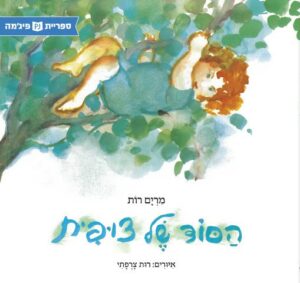
“But Robin doesn’t care, she likes sitting on her own like that”: Do you think Robin is really alone? What do you do when you’re on your own? Where do you like to spend your alone time? You may enjoy taking a stroll through the book, and discussing the experiences Robin undergoes when she’s in the tree’s company. Which of Robin’s experiences did you like best?
Illustrations, color, and creativity
This book is rich in color and details that change with each season. You may want to suggest that your child look through the pages, and search for various items: leaves, clouds, fruit, or animals. Perhaps your child can look for the main colors in each page – a red or green page – and draw pictures that are inspired by the book’s illustrations: a green drawing, a yellow one, or a rainbow-colored one.
A game called "What's my Secret?"
How good are you at guessing secrets? You may enjoy playing the following guessing game: Each player in turn picks a “secret” according to a pre-determined topic, such as animals, books, or something found in nature. The other participants must guess what the “secret” is by asking “yes or no” questions.
Environment – Adopting a tree
How about going outside and looking for a tree close to home? What does it look like? What color are its leaves? Perhaps the tree is bare, and has none? Is it bearing fruit? If so, careful! Not all fruit are edible. You could stroke the tree trunk, and notice the birds and other animals nearby. You may want to visit it from time to time to see whether and how it changes throughout the year. With Robin as your inspiration – can you think of a gift that you would want to give your adopted tree?
Datia Ben Dor
was born in Alexandria, Egypt, in 1944, and immigrated to Israel at 12 months. At the beginning of her professional career, Ben Dor engaged in music education, writing scripts and songs for many Israeli children’s television shows, such as Parpar Nechmad (“Lovely Butterfly”), and Rehov Sumsum (the Israeli version of Sesame Street). Her children’s poems and numerous books are well-known and loved, among them Ani Tamid Nishar Ani (“I Always Stay Me”), Digdugim (“Tickles”), Otiyot Mefatpetot (“Chatting Letters”), and Kakha Zeh BeIvrit (“That’s How it is in Hebrew”). Datia Ben Dor has received much recognition for her contribution to children’s literature, such as the ACUM award, and Bialik Prize for Lifelong Achievement in Children’s Literature.
Proposed Family Activities:
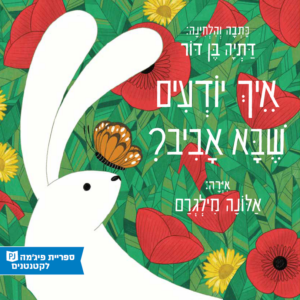
- Can your child find Passover symbols in the illustrations? Perhaps you could ask them to point out the four cups, matzah, Passover Haggadah and wine. You may also want to look for clues that spring has arrived – short-sleeved shirts and shorts, flower bloom, and clear skies.
- Do you know the tune to this song? How about singing it together, dancing round and round?
- Springtime beckons us to go outside and enjoy nature. Where do you like to be when you are outdoors? Perhaps you could take this book along with you, take a stroll near your house, and look for signs of spring together.
- You may want to make “spring binoculars” and look through it all around. Decorate two toilet paper rolls with stickers and crayons, and attach them to one another on their long side. What can you see through your binoculars?
- Ma Nishtana? What has changed in your home in preparation for Passover? Young children can also take part in preparing for the holiday, and particularly Seder Night. Perhaps you could invite them to help you set the festive table, sing Passover songs, ask the Four Questions, and look for the Afikoman, of course!
- Datia Ben Dor has written many well-loved poems and stories for toddlers and preschoolers. You may want to look for them at home or in the library, and read them together.
What pictures tell us:
Your child may want to look at the illustrations, and discover details that do not appear in the text. Were they able to find the cat and bird? What do the animals do on each page?
What do we wear in winter?
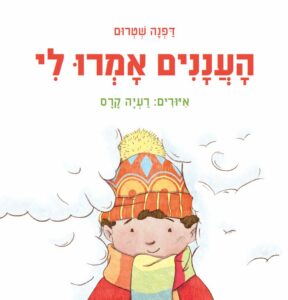
You could go to your closet, and look for winter clothes – flannel undershirts, gloves, socks, boots, and umbrellas. You may enjoy playing a game together in which one of you closes their eyes, names an item of clothing, and counts to ten, and the other must put on that item of clothing before the time is up. How well did each of you do?
Young weather forecasters
Children can follow the weather from a young age. Before leaving the house, you may want to ask them to look up at the sky, and report – is it sunny or cloudy? Should we wear a coat, or take an umbrella?
Getting our toys dressed for winter
Does your child’s teddy-bear or doll have a coat, hat, or scarf? You may want to look for pieces of fabric, or used baby clothes, and help your toys prepare for a rain-filled winter too.
Drawing winter on the windows
On cold and rainy days, you could draw on the cold vapor that covers your windows. Perhaps you would like to draw clouds, and ask your child to mark the raindrops with their fingertips. You could add a puddle, or even an umbrella. You may want to return to the window an hour later – what happened to the drawing?
Games for rainy days
You may want to take a shoebox and fill it with various small surprises, such as stickers, special crayons, small containers of soap bubble liquid, and so on. Hide the box, and only open it on rainy days!
Do you like the rain and cold?
You can take a walk outside on wintry days too! You may want to look up at the clouds, and discover what they look like. Can you see a person’s face, or an animal? Perhaps you’ll get lucky, and have raindrops fall on your head. You could also talk as you walk, and tell each other what you like most about winter, and what you do not. What does the air smell like? What do the trees look like? Perhaps you would enjoy picking up dry leaves, jumping into puddles, and feeling the wind blow.
The holidays, seasons and me
Robin’s Secret
How do You Know that Spring has Come?
The Clouds Told Me