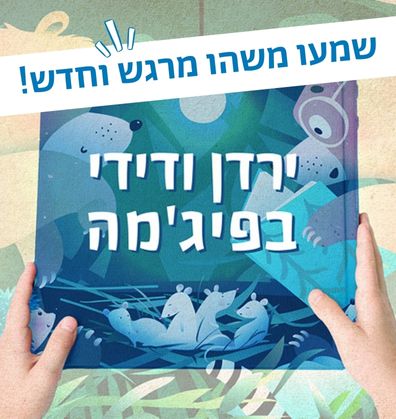
חושך, טיפוס על סולם גבוה, מפגש עם משהו לא מוכר או התחלה חדשה...פחדים יכולים להתעורר במצבים שונים בחיים. פחדים מלווים ילדים וילדות בגיל הרך לאורך שנות התבגרותם. את ההתמודדות עם פחדים מדברים מוחשיים וגם דמיוניים, יכולים ללוות ספרים שמתארים מאמצי התגברות והתבגרות מעוררי הזדהות ואהבה. סיפור על התמודדות עם פחד יכול לסייע לילדים להרגיש שהם לא לבד, לזמן שיח על החוויה ולשאוב כוחות והשראה מתוך חוויות ההתמודדות.
What is your favorite place? Is it at home? Is it nearby? Or is it far away from home? You can share with one another: What is your special place, what do you like about it, and what is special about it.
You can find good things everywhere; every place has some beauty. Take turns choosing a place, whether near or far, in Israel or elsewhere, real or imaginary, and have the other participants ask questions about it to discover what makes it so wonderful.
What is happening near your home? Go on a short walk outside, and try to discover how you can do good in your own surroundings: How about picking up litter and placing it in the recycling bin? Or offering people waiting at the bus station a drink of water? Or setting up a library on your street with your neighbors?
Your children’s favorite stuffed animals and other toy animals can also be part of the story: Add or omit one each time as you act the story out together.
Ask your toddlers to close their eyes, and hide a stuffed or other toy animal under the blanket. When they open their eyes, you, parents, can give them hints as to the identity of the hidden animal, until your toddlers guess what it is. Does it bark? Does it hop around and eat carrots? You could also switch roles, letting your toddlers give you, parents, hints about who is hiding there, underneath the blanket.
We recommend reading the book on your own, before reading it together as a family. Familiarizing yourself with the book in advance will help you read it afterwards at the pace and sequence suitable for your children. Enjoy reading this book together!
Have you ever had to wait for something? Perhaps you could share that experience, and tell each other about anticipation. You could also come up with ideas together of what you could do while waiting, or tell each other what you chose to do in those instances while you waited. What happened in the end?
Look at the final illustrations in this book. Can you find any indications for the birthday party the wolf had almost missed? And which presents did the bunny get? And what was special about the wolf’s gift?
Leaf through this book and decide the order of play. Take turns looking at the illustration you have each selected and acting out the depicted wolf’s motion: Is it going up in the elevator? Or walking on all fours? The other players will have to guess what the wolf is doing.
As our children grow up, they experience various fears, but discussing them helps them to cope with them, while instilling in them a sense of security. Together you can choose to discuss what they find scary, and what helps them overcome their fears.
After reading this book, you may enjoy going to the playground together, and trying out the equipment together as well as separately. Perhaps you would like to invent a special course from the slide to the swing and so on that would bring joy to all of you.
“Hooray, Maayan!” Everyone calls out when Maayan is scared. How do you cheer one another on? Perhaps you could come up with family words of encouragement, find a motivating song, or a chant you all agree on that cheers you up and gives you strength.
Who are your friends in class? In the neighborhood? What do you enjoy doing together? Do you feel alone sometimes? Perhaps, together, you could think of what you could do when you are feeling all alone.
The illustrations in this book depict various animals: a cat, some birds, butterflies, and an owl. Can you find them? Notice the points in the story in which they make an appearance, and who they can help.
The letters in the story describe feelings: missing someone, loving someone, feeling happy…
How about making some cards with words of emotion, as well as phrases that describe these emotions, and connecting each word with the sentence describing it?
Missing someone: I wish we could see each other again
Loving someone: It feels good when we’re together
Feeling happy: This tune makes me want to jump up and dance
Feeling thankful: I’m so glad we met! Thank you for coming round!
Would you like to party like Rosalinda and Aaron? You could use the invitation they made to write an invitation of your own, prepare one of the dishes they had at their party, play some party music, and dance together.
You could even take some photos during your party, and save them in an envelope inside the book you’ve received.
Nuri and Grandpa spend time together, and it’s nice. You may want to discuss and discover the following with your children: What do they like doing with their grandfather, grandmother, or other family members? Is there anything that they wish to learn from them? Perhaps they have a question that they wanted to ask and were too embarrassed to do so?
Which treasures can be found in Grandpa’s cave? You may want to look at the illustrations and think about how they ended up being buried in the ground, and to whom they belonged. You could also imagine what might be hidden in the ground underneath your own home.
What is a mole? Moles are rodents living in underground burrows. The shape of their bodies is suitable for living in burrows as it is long and cylindrical. The moles’ touch and hearing are evolved, and they eat plants that grow in the ground. If you want to know more, please look for information on moles online.
You could also be a mole for a day!
Make a tunnel out of sofas, bed sheets or pillows, go into it carefully and crawl out. You could also turn off all the lights at home, and use a flashlight to go left, right, backwards and forwards, overcome various obstacles and… reach your destination!
You may enjoy playing the following game and finding out what happens when we answer before we ask: One player says an answer, and the other players try to guess what the question was. for instance, the answer “My name is Nuri” will be met with the question “What’s your name?”. Which questions match answers such as “I’m five years old” or “a purple monster”?
The illustrations in this book demonstrate how Itamar and the rabbit imagined one another versus what they really look like. You may want to check and compare: Do the monsters resemble the real child and rabbit? Are there any similarities between the monsters both Itamar and the rabbit had imagined?
Were you, parents, also afraid when you were younger? Perhaps you could tell your children what you were afraid of, and how you grappled with your fear. You could also listen to your children as they tell you what scares them, and together, think of ways to overcome the fear.
What does a scary monster look like? How about drawing one together, and then trying to imagine: What is the monster’s name? Who are its friends? What does it enjoy doing, and what is it afraid of? Now that you’ve gotten to know the monster, it may be worth asking yourselves whether it is still as scary as it was before.
“Jimalaya Jim! Zuzu buzu Yam Pam Puzu!” Each of the characters in this book has a magic word it uses when something scary happens. What is your magic word? You’re welcome to chose a family magic word together, and think of times when it would be appropriate to use it.
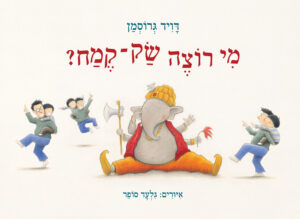
In Gilad Soffer’s illustrations the piano turns into a shark, and the umbrella is transformed into an eagle. You may want to look at the illustrations together, and notice the various household items, and the amusing shifts between reality and make-believe. Perhaps you would like to pick an item or piece of furniture in your own home, and draw what it turns into in your imagination.
Which rooms and pieces of furniture are on your child’s way to bed, what is their route to the bedroom? You may also enjoy making a game out of bedtime, and choosing a funny walk, dance or other movement – perhaps even carrying your child on your back. Who would buy your “sack of flour”?
Yonatan is deterred by the elephant drawn on the carpet. Sometimes items look different in the dark. You may want to ask your child whether there are any items or pieces of furniture in your house that look different at night. You could discuss their fears together, as well as ways to overcome them.
How does your child get ready for bed? Do you have a special ritual – a hug and kiss, a prayer, or a song that accompany your transition from daytime to nighttime? Do you read a bedtime story together? Following this book, you may want to invent a new ritual by which to say goodbye to the departing day.
Perhaps you would like to share some childhood memories with your child: Did you share a bedroom with any of your siblings? Who put you to bed? Were you told any stories or sung and lullabies before bedtime? Did you sleep with a specific doll or teddy-bear? Perhaps you can think of a funny story about bedtime from your past to tell your child.
At Yonatan’s house, a piggyback is called “a sack of flour”. In some Israeli homes, it’s called “Abu Yoyo”. Does your family have any special names for childhood games? Did you have any special childhood games where you came from? This may be an excellent opportunity to teach your child these games.
Who Wants a Piggyback is the last PJ Library book you will be receiving this year. We hope you have enjoyed the books, and wish you a wonderful summer, and a smooth transition to kindergarten or school!
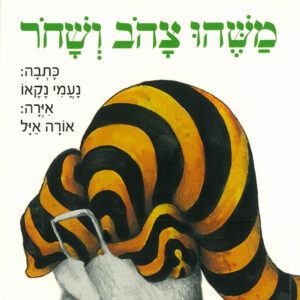
Ora Ayal has illustrated many famous Israeli children’s books. Her style is simple and easy to identify, and her books have put smiles on the faces of thousands of children around the country. You can set off on a journey through the story’s charming illustrations, and follow Tali as she turns the “yellow-and-black something” into an imaginary lion.
Take a look at the front and back covers of the book. What is portrayed on the front, what is on the back, and how are they connected?
You can look for the illustration of Tali and the lion swinging from a branch. Notice the expressions on their faces. Now who is afraid?
Can you discover the faces hiding in the colored illustrations? Who are they?
What are Tali’s daddy and the other people in the waiting room doing while Tali and the lion set off on their adventure?
The imaginary lion transforms as Tali approaches him, takes control, and eventually befriends him. You can stand together in front of a mirror and imitate the lion’s facial expressions on each page.
Things we fear often seem large and forceful at first. As we overcome our fear they become lighter and we sense relief. After her visit to the dentist Tali was no longer afraid, and the lion returned to his bag and once again became a “yellow-and-black something”. You can look for a colorful shawl, piece of material or blanket that can be contained inside a handbag. Your children can remove the shawl or material from the bag, don it on their shoulders and pretend they are a lion.
What did you fear when you were young? Sharing your life experiences with your children and telling them how you overcame your fears can help them expand their “tool box” for overcoming their own fears.
“Something Yellow and Black” is the last book distributed this year through Sifriyat Pijama. The school year is coming to an end and soon your children will set off on new experiences – whether they move to a different kindergarten or start elementary school, or join the group of older children in the same setting. We hope that this story and the ensuing family discussion will help your children in their adjustment to the new circumstances. Wishing you a wonderful vacation from Sifriyat Pijama!
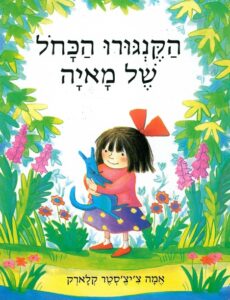
Do your children have a favorite doll or stuffed animal? After reading together the story about Maya and her kangaroo, you can discuss the special feelings we have toward objects, toys or stuffed
You can take a picture of your children holding their stuffed animal, print out the photograph and decorate a frame for it. The framed photograph will serve as a memento in future years and will remind your children of the special relationship they had with the doll when they were
The illustrations that accompany the story hint at changes in the blue kangaroo’s feelings, as more and more stuffed animals join him in Maya’s bed. You can flip through the pictures with your child and ask them to describe how they think the kangaroo feels on each
Each night before going to sleep Maya recites “I love you, Blue Kangaroo”. Even when new dolls and toys are added, she ends her recitation with the same line. How do you get ready for bed? Do you have a special bedtime song, recitation or ceremony?
You might want to discuss with your children why they think Maya agreed to share so many toys with her baby brother, but woulddn’t give away the blue kangaroo. Do your children have toys or dolls that are easier to share, and others they refuse to part with?
Together with your children you can look for the pictures of Maya’s baby brother. You can tell the story through his eyes, and try to think how he feels as the story
Maya and the blue kangaroo have a special relationship, which is not weakened as new dolls are added. Do you and your children have special relationships with family or friends? You can talk about this with your children, and reinforce their confidence in your feelings toward them.
The gifts that Maya receives throughout the story are new and shiny, while the old kangaroo is old and worn. Sometimes we too prefer things that are new and shiny, and it can be hard to decide what to give up. The story can lead into a family discussion on loyalty, weighing considerations and making difficult
The blue kangaroo feels crowded in Maya’s bed, but many times it is warm and cozy to lie together in bed! You can cuddle up and read books together in bed, and following this story, add more and more dolls and stuffed animals. You can also sing together fun songs like “Shovavim Bamita” by Datia Ben-Dor:
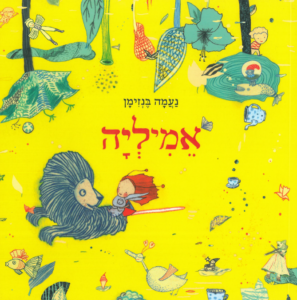
Together with your children, take the time to look closely at Na’ama Benziman’s beautiful illustrations. You may want to stop at the page where Emilia approaches the three steps leading to the preschool, and note the changes in her facial expression.
After reading the story, you can make up your own fantastic story and draw it.
Emilia really wanted to enter the classroom on her own, “without any problems and without making a scene”. You and your child can look at the first illustration in the book, that depicts Emilia saying good-bye to her mother, and compare the entrance to her classroom with your child’s schoolyard. What helps your child say good-bye and go into the classroom in the morning? Do you have a special ceremony or technique that eases the separation? After reading the story about Emilia, you may want to invent a new way to say good-bye in the morning, a way that will help your child feel grown-up and brave.
Like Emilia, each one of us feels sometimes big and other times small. You can read the story together again and take note of the points in the plot when Emilia feels big and when she feels small. You might ask your child when they feel big and small, and emphasize the advantages of each condition.
Emilia’s friend Dana enters the story at precisely the moment when Emilia is feeling lonely. You can use this as an opportunity to talk about friendship. You might ask: What do we like to do together with our friends, when do we prefer to be alone and what is more enjoyable to do together with others?
Dana is very happy to see Emilia, and they play together. You too can play together and even make your own tea party like the girls in the story. What will you serve at your tea party, who will be big and who will be small? You can invite other family members, dolls or stuffed animals to join your party.
You can recount all the things your child knows how to do alone, and some tasks he or she needs help with. You might want to share an experience of your own, and tell your children about a time when you overcame an obstacle on your own – and when you were helped out by family or friends.
Emilia’s journey into the classroom is depicted like a dream. You might want to talk to your child about dreams. Do you remember your dreams? You can try to draw a picture of one of the dreams you or your child dreamt.
You may want to take this opportunity to share one of your own childhood experiences with your child. Did you attend preschool? If so, do you remember being sad saying good-bye in the morning? With whom did you play, and what did you like to do with your friends? You might want to compare your preschool with your child’s current classroom.



 The Bus Stop
  The Boy Who Wouldn’t Sleep Alone
  The Wolf Will not Come
 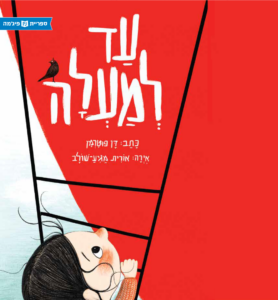 Up and Over
 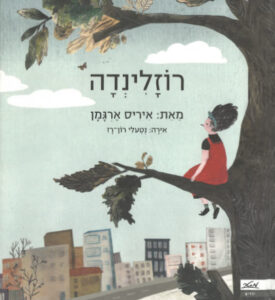 Rosalinda
 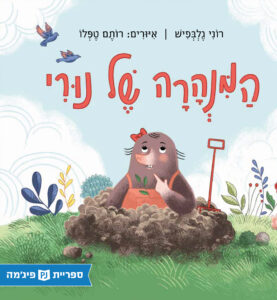 Nuri’s Tunnel
 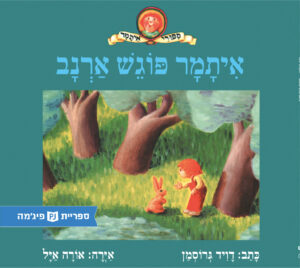 Itamar Meets a Rabbit
  Who Wants a Piggyback?
  Something Yellow and Black
  Maya’s Blue Kangaroo
  EMILIA