Following Yonatan, you can discuss and share: What can be the meaning of the phrase: “to open up your heart”? Is there an image or item that reminds you of loved ones, and make you feel like your heart is opening up and your feelings are welling up?
Thanks to the lost keys, Yonatan gets a glimpse into his father’s daily routine. And what did you do today? You can play charades, miming to one another a place you have visited or something you have done. Take turns acting out a place or action, while the rest of your family tries to guess where you have been and what you have been up to.
Yossi Abulafia’s illustrations are full of details. You may want to stop and look: Which animals can you find in the illustrations? Do they appear more than once? What are the people on the street up to? And now, look at the illustrations again: Have you discovered anything that you did not seen the first time?
We recommend reading the book alone first, before reading it as a family. Prior familiarity with the book helps to read it seamlessly later, at a pace suitable for toddlers. Enjoy reading this book!
We can all help others, even toddlers. You may want to ask your toddlers how they can help others, or tell them that they are helping when it happens: “Remember when you helped me set the table?” “Look at you helping me put away the toys!”
Would you like to listen to the book Noni and his Mom Walk Homefrom Kindergarten? Please scan the QR code to find a recording of this book. You could listen to it while traveling, playing, or sitting together while turning the pages of the book.
The illustrations are part of the story, and using them, toddlers identify and recognize the plot and some of its details. You may enjoy looking at the illustrations together, and searching for the items that Nomi gives his mother: ‘Where do you see an illustration of a bag?’ and ‘Where can you find an illustration of a coat?’
Inspired by the items piling on top of mom in this book, you may want to take turns building a tower out of various items: Very carefully, one on top of the other, you can place building blocks, toys, hats, bags, and anything else you might want to add.
Who likes their name? What is the story behind your family members’ names? Are there other family members who have the same name? or strange names? Are you named after anyone? You may want to do some research among your extended family. Who knows the stories you will uncover…
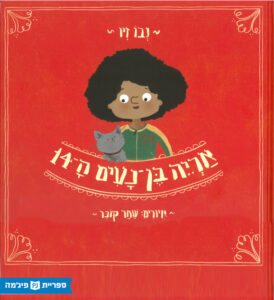
Shahar Kober’s illustrations invite us to follow Arie, and join him as he enters his family story. Can you find Arie in the different pages of the “Book of Aries”?
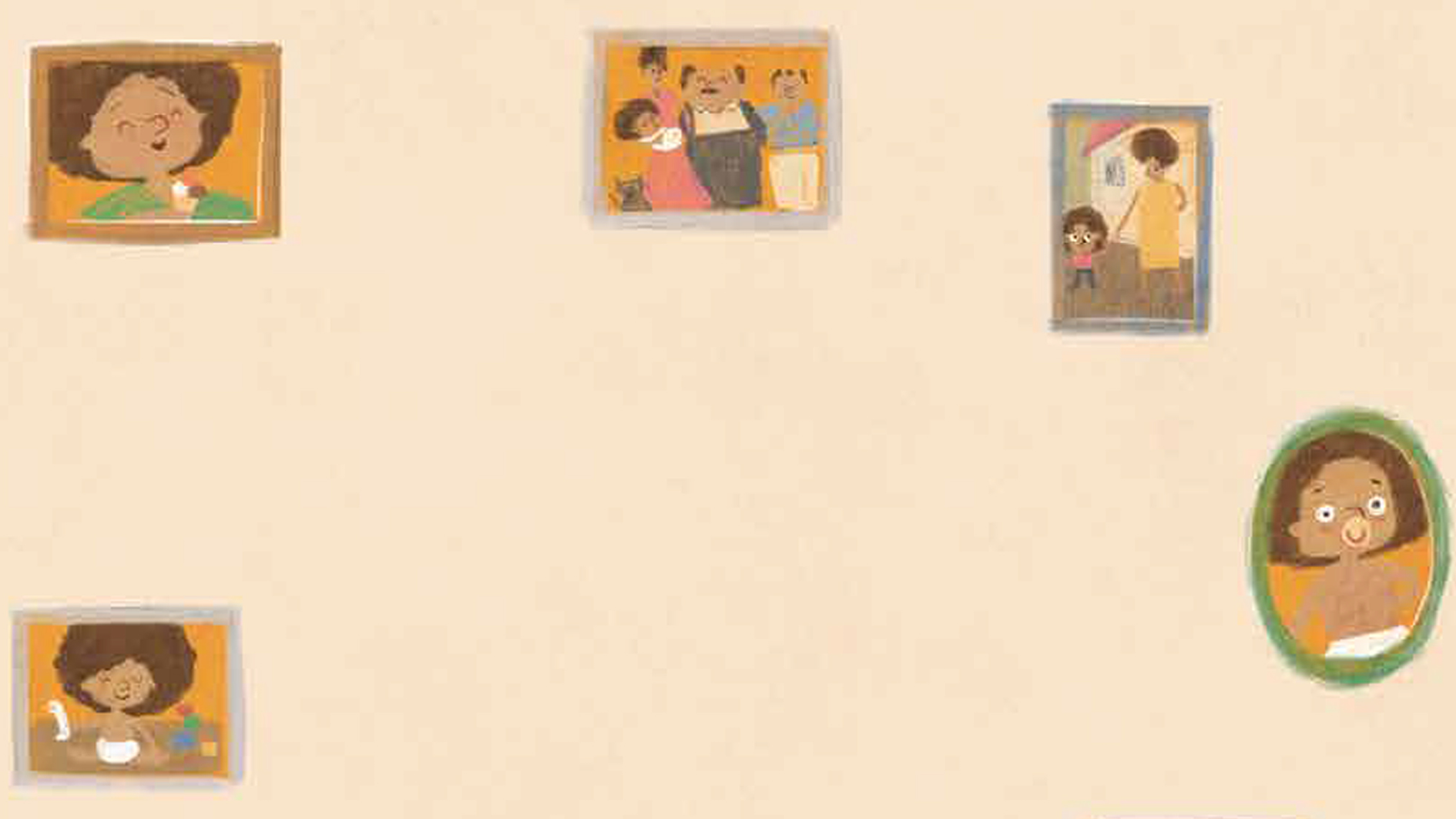
You may enjoy looking at old family photos of events that happened “once upon a time”: look through the pages of a photo album together, listen to the stories behind the events depicted in them, and choose one photograph you wish you could enter.
How about creating your own family book, an album that will tell your story and that of your children, just like the Book of Aries in this story. Take a blank notebook, and collect stories from your grandparents, aunts, and uncles. Write down their memories from the time you were babies, funny words you said, or some special behavior. We recommend collecting such stories about both parents and children in your family. You should put in old photos and mementos from kindergarten, daycare, and the time when you were tiny babies.
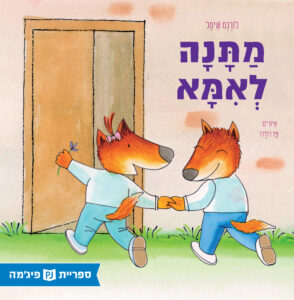
You may want to snuggle up and look through the book together. You could follow Tani’s facial expressions and ask your child: How, do you think, Tani felt when his sister chose to give Mama a flower?
We suggest pausing at the page on which Tani announces that he, too, needs a box for his gift, and asking your child: what will Tani’s gift for his mother be, do you think? What gift would you like your child to prepare for you?
You could act the story out using puppets. Together, you can imagine what the puppets will do with their mother at the end of the play.
Perhaps you could play a game called “what’s the gift?”. Each player in turn picks a toy or small object and puts it in a box. The other players try to guess what is in the box by asking questions and receiving clues. For example: Is the gift an animal? Is it something yummy? Is it made of wood?
You may want to tell your child how you honored or are currently honoring your own parents, and remind one another of the ways in which your child honors you. Together you can think of an older family member you could honor – perhaps by giving them a flower or hug, or surprising them with a phone call.
How about choosing a box and decorating it with stickers, drawings, and ribbons? Perhaps you could decide together to whom you will now give it.
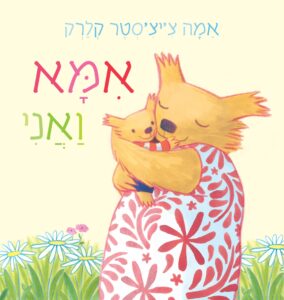
Duvshan and Mummy do all kinds of things together. You can go over the illustrations in the book with your children and with their help, tell the story in your own words. Invite your children to “read aloud” the story from the point of view of little Duvshan, and you can tell the same story from the perspective of Mummy Bear. At the end, you may ask your children to choose one joint activity that is described in the book, and do it (or a similar activity) together.
Honoring one’s parents: The story presents a wonderful opportunity to share your own experience with your parents, by recalling ways in which you honor or honored your parents. Be sure to let your children know how they honor you too!
Duvshan helps Mummy with gardening work and in the kitchen. Your children can also honor you and help out around the house. They can help set the table, match socks from the laundry, or help dust the furniture. For very young children this is a wonderful opportunity to feel needed and learn that they are capable of helping out with household chores.
Like Duvshan, many children like to prepare little “surprises” for their parents and show their independence. They can get dressed by themselves, wash themselves, pick up and organize their toys. And just like Duvshan’s Mummy, you too can marvel at your children’s desire to help you – and in return prepare a small surprise for them!
A “patience clock”: We all know how difficult it can be for young children to be patient. Setting an alarm clock or an hourglass can help your child know when the “being patient” time has ended. If you plan what you’ll do together when the time is over, it might help the time pass even quicker.
Many young children have a hard time thinking up ways of being on their own. For such instances you might want to prepare an “I Can Do It All By Myself” album together with your children, including a collection of drawings that describe ideas for independent activities. Each page can contain a different activity. Your child can color the pictures and you can add short sentences such as “I can draw”, “I can cut”, “I can water plants”, etc. Looking through the album will help the children choose an activity to carry out on their own while they’re waiting for you, and afterwards, just like Mummy Bear, you can say: “Oh, my little one, you are so talented!”
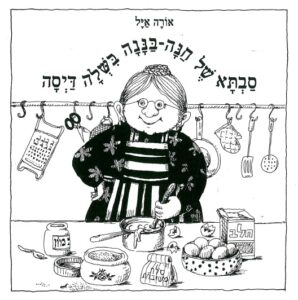
If you carefully follow the text and illustrations of the story, you will surely note the different paths taken by the words and the pictures. Read the story again with your child. Each time you arrive at the sentence “Meanwhile, Hannah Banana rushed on her way…” ask your children to describe what they see in the picture. Is Hannah Banana really rushing? What does she do and whom does she meet along the way to Granny’s house?
Did you notice the cat who accompanies Hannah Banana on her way to Granny’s house? You can ask your child to point out the cat on each page, and ask them how they think Granny will greet him when he arrives at her house.
You can play the finger game “One Little Piggy” with your child. According to the story, who “had none” at the end of the rhyme?
Hannah Banana’s Granny Cooked Porridge is actually two stories that happen at the same time. You can act out the stories with your child. First ask your child to be Hannah Banana on her way to grandmother’s house, while you pretend to be Granny. Then you can change roles. If other family members or friends are with you, they can be included in the skit as well and take on the roles of the neighbors.
“To each his own”: At the end of the story we discover that Hannah Banana doesn’t even like porridge! You can ask your children if they believe this, and discuss which foods they like in particular and what they don’t really like.
You can explain to your children that “Hannah Banana” is a nickname. Do your children have a nickname or a special name that only some people use when addressing them? If so, do they like their nickname?
Preparation: Cook the water, milk, semolina and sugar over a low flame, stirring constantly. Bring to a boil. The porridge is ready when the mixture is boiling and the semolina is cooked. Sprinkle with cinnamon and add a dab of butter. Bon Appetite!
Ruthi proclaims that “there’s no other coat like this in the world!” You may ask your children what it is that makes Grandmother’s coat so special. Ask them to describe the coat in their own words. Don’t forget to note the soft material and the surprise-laden pockets! Do you have special clothes or objects that help you feel better? This is an opportunity to remind children of blankets, stuffed animals or a special cloth that help them feel calm in times of distress.
Dressing up in costume is a wonderful way to foster one’s imagination. You can provide old clothes, hats and other props to encourage your children’s make-believe play. You may dress up in a big old coat and, adding a few other relevant props, can act out the story together.
Many of us have childhood memories connected to touch. Do you too have a distant recollection of a special piece of clothing? You can share this childhood memory with your child and tell them about the special connection you had with the clothing, or with your grandparents, aunts or uncles.
The “It’s Like” game: The author Miriam Roth compares the feel of Grandmother’s coat with the fur of a cat. You can make up a word game to play with your children: Place objects made from different materials – e.g., metal, plastic, cloth, etc. – into a large bag. One by one, each player removes an object from the bag and describes the object declaring “It’s soft like…”, “It’s cold like…”, “It’s coarse like…”
Ask your child to show you the picture depicting Ruthi sick in bed. You can ask them how they feel when they’re sick. What helps us feel better? Do you have any special “family remedies” that were passed down from generation to generation? You can ask a grandparent, aunt or uncle what they recommend to overcome a sad mood or a mild cold.
If your child has a grandparent, aunt or adult friend who lives nearby, reading the story together could be a special treat for both of them, and lead to closer relations between the generations.
Miriam Roth (1910-2005) was a well-known children’s author and educator. In 1998 she won the UNICEF Smile Award for her book “A Tale of Five Balloons”, and in 2002 was awarded the prestigious Bialik award for literature. Roth’s books include Israeli children’s classics such as “Tiras Cham”, “Maaseh shel Hamisha Balonim”, and “Habayit shel Yael”.



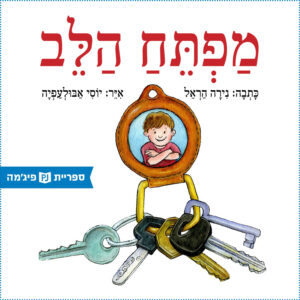 The Key to My Heart
 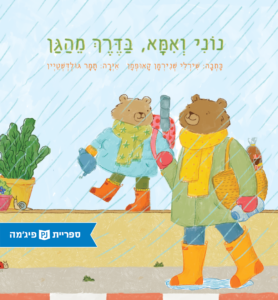 Noni and his Mom Walk Home from Kindergarten
  Arie Ben Naim XXIV
  A Gift for Mama
  Mummy and Me
  Hannah Banana’s Granny Cooked Porridge
 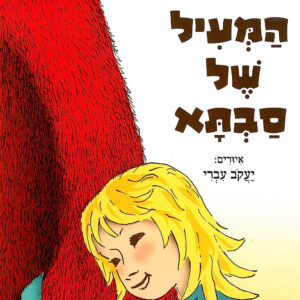 Grandmother’s Coat