אגדות הן סיפורי עם, סיפורים שעברו מפה לאוזן מדור לדור ויצירות פולקלור, אשר מהוות חלק בלתי נפרד מההיסטוריה התרבותית של עם. לעם היהודי אגדות, סיפורים עממיים ויצירות פולקלור רבות. אספנו עבורכם סיפורים מלאי קסם ואווירה אשר סוחפים את דמיונם של הקוראים למחוזות רחוקים ולזמנים שונים, ומגישים בתבונה, ברגישות ובהומור ערכים חכמים ומשמעותיים לחיים.
While you read, you can use different voices and invite the children to do the same: What does a person sound like when s/he bursts out crying? What does a hole being drilled into the wall sound like? Even if you’re not professional actors or actresses, your active participation in the story will enhance your shared experience and delight.
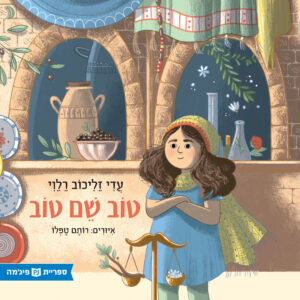
The judge learns from the girl how to resolve the case brought before him. Following this book, you can discuss your children’s knowledge and strengths with them: It can be a hobby, insight or shared memory from an incident in which they contributed their experience and wisdom. You, parents, should also share: What have you learned from your child?
Do oil droplets indeed float in water? You can see for yourselves by adding a few drops of oil into a bowl filled with water. You can later check what else floats: What happens to a piece of paper in water? Or a paper boat? A fork? Or a leaf? And how about a small plastic toy?
Just as they do in this book, you too can try to resolve a disagreement on some issue: Each party presents their case, everyone listens, and suggests how to resolve the dispute.
You can also swap roles and explore together – is only one of you right? Or can you, perhaps, reach some other kind of understanding?
You may enjoy discussing flexibility and stability in life. You may want to share examples from everyday life. Situations in which we behave like cedars, rooted in our positions, or situations in which we are agile, changing our behavior or opinion. What happens when we realize that our desires cannot be met as we expected them to be?
You may enjoy sitting opposite one another, inhaling and lifting your arms up at your sides until they are straight up. Next, exhale while lowering your arms until they reach out in front of you. We recommend doing some short exercises each time and gradually add more. Enjoy!
What’s the opposite of reed? Cedar! And what’s the opposite of hot? Cold! And the opposite of old? Young! What’s the oppostive of…flexible? stable? sour? baby? Take turns saying a word and having the other players come up with its antonym. By the way, what’s the opposite of… opposite?
What gives you pleasure for free? – You may want to take a look at the illustration in which the wise man presents all the good things in our world that are given to us for free, and share your opinion of them with one another – Do you also enjoy them? And which other things that are given for free do you like?
A girl and boy appear in many of the illustrations in this book. You may enjoy looking for them as you leaf through it, and thinking of reasons why the illustrator chose to add them to the illustrations together.
Would you like to make challah? A recipe is waiting for you on the final pages of this book. Bon Appetit and enjoy the wonderful aroma that will fill your home.
You may want to discuss Cyril and Tevye’s choice: Why do you think they chose not to use all the gold? Did that surprise you? Why, in your opinion, did they decide to invest the gold in schooling?
The goat is by Cyril and Tevye’s side throughout the book. You may enjoy looking for the goat in the illustrations: What is it doing? What is its connection to the family? How about trying to tell the story from the goat’s point of view? What happens to it as the book progresses?
Gather several small gifts that you would like to give your family: A drawing, greeting card, or item. Take turns hiding your gifts and having the rest of your family look for the treasure using clues: “Near and far”, “hot and cold”, or arrows placed around the house.
האזינו לפס הקול של הספר! If you scan the QR code, you will be able to hear the soundtrack of the story. You can listen to it together at home, while traveling, or anytime and anywhere you choose.
Like Nuri, we could also discuss the idiom “cast your bread…”, and the times in which we have been kind to others. Perhaps you could ask: are we being kind in order to be rewarded? Can the kind deed we did in itself be the reward that we receive?
What else can we cast upon the waters that would be helpful to others? It is not always objects or tangible things that we offer others, sometimes it is our actions and words. Your family may want to sit in a circle, and go round it offering kind words to one another. You could also create a “sheet of kindness” for each of you, where the others write or draw kind, empowering words.
Following this book, you may enjoy creating some artwork together: paste images of different kinds of fish on a sheet of paper – a school of small fish, a whale, etc. – and then attach speech bubbles to them, containing what they say about Nuri’s actions, or their friends, the other sea creatures.
Do fish eat bread? And what do birds eat? Which animals are we allowed to feed? You could look for answers to these questions, try your hand at feeding, or experience the satisfying feeling of giving to others. You may want to place a bird feeder out on your balcony or on a tree, and hope that word of the bird feeder will travel on birdwings.
The brave stork’s reward was… a story worth gold. Do you have such a family story? You could tell it to your children, and search for other family stories by asking your grandparents and other family members.
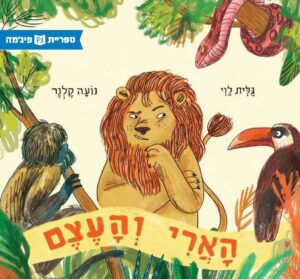
Imagine you were the stork – what would your thoughts be? What would you have said to the lion, and how would you have told the story? Try to tell it from the stork’s perspective. You may also enjoy drawing the story, or making costumes with which to act the story out. How about taking photos of your short play, and printing them out to create a book worth gold.
Animals in fables have human characteristics: the stork is brave, the lion is strong, and the ant is hardworking. Which animal best symbolizes you? Try to think and discover which animal is most similar to you, and write down sentences that characterize you, such as: “I’m as smart as a …”, “I solve problems like a …”, or “I love singing like a …”
Is the meal prepared by the lion appetizing? It’s time for a feast. You may want to prepare your family’s favorite food, draw animal characters on paper napkins, make a crown for each person sitting at the table, and eat together.
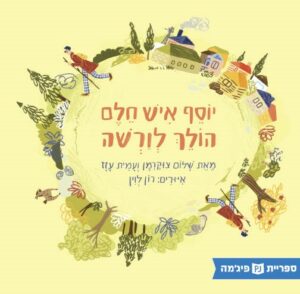
Chełm is a city in Poland, and in Jewish folklore, it is the hometown of the wise men of Chełm, who are not actually all that smart: they are ridiculous and naïve, and their stupidity is often depicted with a smile and much compassion. The wise men of Chełm have become known for their silliness and pointless actions, and are the protagonists of many amusing tales. The term “wise men of Chełm” has come to mean those who act irrationally and absurdly. The stories about the wise men of Chełm can be found in collections and anthologies for both children and adults.
The story about Joseph makes us smile and laugh. You could ask your child: What amused you about this story? What about the illustrations did you think was funny? What usually makes you laugh?
Inspired by Joyful Joseph, who began each morning with a song about his beautiful life, you too could write a song and tune, and sing it together.
What about your town do you like? You may enjoy taking photographs of places and people you love, or write a short poem about your hometown, using Joseph’s song as inspiration. You could even write a tune and turn your poem into a song.
How will we remember the way? You may want to step outside, look around you, and identify landmarks, such as a tree, bench, or the name of a street. You could draw a map of the route you’d walked, add your landmarks to it, and take it with you next time you set off on your way.
Joseph loves his town and looks kindly upon it. Try to follow Joseph’s footsteps and describe your room – what about it is beautiful and good? What do you love about it? And what do you like about your home? You could take a family tour, during which each of you will describe your favorite parts of the house.
An arrow pointing right, an arrow pointing left, one pointing forward, and another pointing backward – that’s all you need to create a particularly energetic game. You could draw these arrows on dice or directly on the floor, and ask your child to jump in the direction to which the arrow points. You could also throw number dice and jump up and down as many times as shown by the dice.
How about playing “treasure hunt”, and drawing arrows leading to the sought-after treasure?
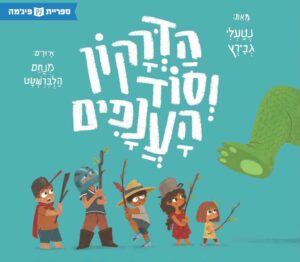
Reading & pausing – this story is comprised of several events, and we therefore recommend stopping every once in a while, and trying to think what will happen next: What will the children do? What secret will be revealed?
Together & separately – what is it that you do better together than you do separately? You may want to discuss this with your child, and share stories of successful collaborations you’ve had as children and adults with them.
Having read this book, you may enjoy collecting some twigs or thin branches and finding out for yourselves: What happens when you try to break one as opposed to a bundle of them?
When the children in the story begin to get frustrated, their mother says: “It’s ok, don’t despair, sweethearts. We fall down, we get up, we overcome, and hold our heads up high”. What encourages us when we feel like giving up? Then how about coming up with a family cheer for when the going gets tough.
To make your very own dragon, you will need a cardboard box, crayons, and some paper: you could cut out holes for your eyes and mouth, add on paper teeth and ears, as well as a cardboard tail. You could even make a family dragon, moving it in tandem – the dragon will only move if you all work together.
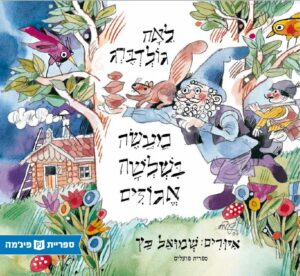
Leah Goldberg (1911–1970), born in Kaunas, Lithuania, was a poetess, authoress, translator, professor, and editor, while also heading the Comparative Literature Department at the Hebrew University of Jerusalem. At the age of 23 she had completed her PhD on Semitic Linguistics in Germany, and upon immigrating to Israel in 1935, began to publish her writings, and soon became a well-loved and well-known poetess. Her publications, and among them her children’s stories and poems (Apartment to Rent [Dira Lehaskir], Magic Hat [Kova Ksamim], What do the Does do? [Ma Osot HaAyalot?], and many more) have become invaluable gems of Israeli literature. In 1970 she was awarded the Israel Prize for Literature; however, having unfortunately passed away several months prior to the ceremony, her mother received it on her behalf.
You may want to huddle together, leaf through the book, and ask your child to look for what each character received in exchange for the nuts. Pay attention to the facial expression of those receiving the nuts. Perhaps you could look in the mirror, and see what you look like when you smile with joy.
How about looking for puppets or toys who could represent the dwarf, squirrel, lumberjacks, prince, princess, and child, and give a puppet theater rendition of the story together?
Were you surprised by the ending? Perhaps you would like to make up your own, and illustrate it.
The characters in this book sing when they are happy. What do you like to do when you are happy?
Do you know any other stories or poems by Leah Goldberg? You could go over to the bookshelf at home or the local library, and look for some, such as The Scatterbrained Man from Azar’s Village (Hamefuzar miKafar Azar), Apartment to Rent (Dira Lehaskir), or The Bad Boy (HaYeled HaRa).
The nuts in this book are magical: “whomever discovers their secret will be the happiest in the world”. You may want to share with one another what makes each of you happy. Are the same things that make you happy make your child happy too? Perhaps you can think of a family member or friend who you can surprise with something that will make them happy. How about making them some home-baked nut cookies?
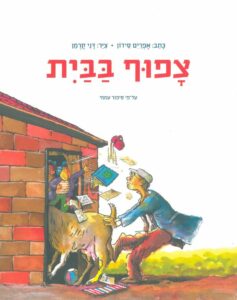
The illustrations demonstrate the clutter and noise in this house. You may enjoy looking through the book together, and finding what is misplaced and funny on each page. You could also compare the picture of the house from the beginning of the book to the one after the goat had been removed. What are the similarities and differences between the two illustrations?
Shimon’s house is not only crowded, but noisy too. You could demonstrate this to your child in the following way: turn on the TV or radio, and gradually add some of the sounds mentioned in the story. One of you could moo like a cow, another could make chicken noises, or a goat’s… until you will no longer be able to hear the TV or radio. Stop making all the animal noises at the same time, and discover just how quiet the room has become.
This story is the origin of the expression Lehotzi et Haez (“to remove the goat”), meaning to cause tremendous relief by removing something unnecessary. Is your house crowded? Does your child have any unnecessary “goats” in their schoolbag or pencil case? Try to find the reason for the clutter in your home – perhaps the drawers are full of old toys, clothes, or shoes that are no longer needed? You could tidy the house up together, and donate some of the things you no longer need. How did you feel once you removed the “goats” from your home?
Shimon and his wife go to their rabbi to seek his advice. Talking is helpful. Who do we turn to when we need advice? Who helps us solve problems? You could share some unexpected advice you may have received with your child that had proven helpful.
You may enjoy discussing a change of perspective with your child. Sometimes we cannot change reality, but are capable of changing the way we view it. Together, you could think of times when a change of attitude led you to see things differently. For it is those who are content with their lot that are truly rich.
Humor and folk tales
It’s Crowded at Home is a folk tale that takes place in a Jewish shtetl. The message of the story is conveyed humorously, with no direct preaching. The amusing tale of the goat, like many other humorous stories in Jewish tradition, remind us of that valuable life lessons are best learned with a smile!
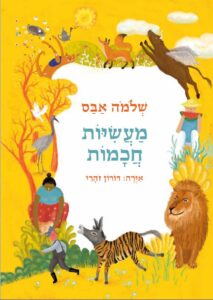
The book contains many tales, and need not be read in its entirety in a single sitting, nor in order. You may want to suggest that your child select one fable at a time, and then proceed to read it together, and discuss it. Use the title and illustrations to help you select the story. What were you able to take away from the fable to your own life?
Every community originated in a different country, and each brought with it fables and tales. Is there a certain story you had heard from your grandfather or grandmother? A tale passed in your family from one generation to the next? You may want to continue this generation chain, and tell it to your child.
Perhaps you would like to pick a story and act it out. You may enjoy using relevant costumes and props.
You may want to open an atlas or look for the world map online. Can you find where each story came from? Do you know of any other traditions followed there? Perhaps you know some dishes or outfits characteristic of that country, which you would like to demonstrate to your child through videos or images. Do you know a family who immigrated to Israel from that country?
You could write your own fable together! Perhaps you would like to begin by thinking of a moral which you would like to convey through the story, and invent a tale that tells it.
Which stories in this book are your favorite, or your child’s? You may enjoy making an illustrated book of fables your family particularly likes, and finds significant.
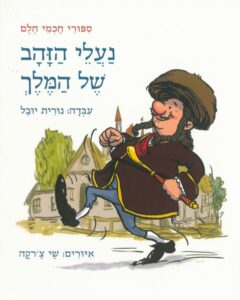
Flip through the book, paying particular attention to the illustrations by Shai Charka. How did the illustrator choose to depict the behavior of the people of Chelm? You might ask your children to suggest other ways that the people of Chelm could have conveyed honor and esteem for their
What makes you laugh? The Chelm stories paint human behavior in a ridiculous and amusing light. Similar tales — about Jucha, Hershele, and Chusham — appear in different cultures. Do you know any stories about these characters? You can look at home or at the library for more collections of humorous folktales and share them with your
Spread a towel or rag on the floor, to symbolize the mud in Chelm’s streets, and use simple costumes and props (shoes, hats, scarves) to act out the
The people of Chelm look for a way to distinguish the king from the rest of the townspeople, because it’s important that he “be honored at his full value.” After you read the story, discuss the value of deeds vs. status and honor. Ask your children what they think makes someone worthy of being honored?
After reading the story, your children could try being “King for a Day.” A pretty scarf or shawl can be made into a robe; they can borrow mom’s or dad’s shoes; you could work together to make a crown. How does it feel to be like the king in the story? How do the onlookers (you–their parents!) honor him?
In our story there are things that don’t fit into place, things that are ridiculous and the opposite of what one expects. You can thumb through the pages together, examining the illustrations and discovering these things.
The children can draw pictures of the grandfather, grandson and the donkey and paste them onto the backs of small magnets. The three characters are invited to set out on a “journey” on the refrigerator door or any oother metal surface. They can take turns, sometimes galloping and sometimes being carried.
Instead of riding on the donkey, the grandfather and the grandson carry the donkey on their shoulders! Select an object, and use it in a different way than for what it was originally intended. Place a number of household objects with which the children are familiar in a box. Each participant takes out an object and uses it in a way that is different from its intended use.
Who can keep a straight face? Each person in turn tells the next one: “My donkey, hee-haw,” and tries to get him to laugh. Continue saying this back and forth, faster and faster, until one of you bursts out laughing.
Grandmother waits at home for Grandfather and the grandson. When they return, she is sure to ask them, “How was your journey?” You and your child can be the grandson and grandfather, and explain in your own words what happened on the way to the city.
Share funny stories with your child. Think back to funny events that happened to you and share stories from the family lore. Be sure to explain the difference between “laughing at someone” and “laughing with someone”!
Sofma’asehbimachshavatechila (Think before you act)
“Sofma’asehbimachshavatechila” or, “Think before you act,” is an expression taken from the Shabbat hymn “LechaDodi” that Rabbi ShlomoAlkabetz wrote in France about 400 years ago. The hymn tells of G-d’s creating the world in six days with the thought that the Sabbath will arrive at the end of the week and will be the height of the creation.
A person who knows where he wants to go will have an easier time getting there. Is it possible to adopt every suggestion we are offered? How do we know which suggestion is the right one for us?
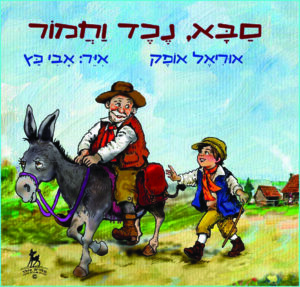
When a donkey knows the path he will not stray from it. This is how he brings his rider to his destination in the safest way. Together you’re your child, look at the expression on the donkey’s face throughout the story. What, in your opinion, does he feel on hearing all the advice he receives?
Each person who passes by gives the grandfather and the grandson advice, and the two become very confused. At the end of the day Grandfather says, “We can’t please everyone.” You can discuss with your child: Who knows us well? Whose advice should we accept? Whose opinion should influence us the least? When should we stand up for our rights and not be drawn into something we know is wrong, on the advice of others?
Sometimes we feel that what others say is more important than our own inner sense of right and wrong. This is a good opportunity to help your children develop their self-esteem and trust their instincts. The absurd ending of the story illustrates with humor the price of going along with others without giving thought to one’s own beliefs.
From start to finish: Using toy figurines, you can plan the route of Grandfather, grandson and the donkey with your child. Place pieces of Lego, blocks, or even pillows throughout the room. Before setting out, consider the route together, from the planning stage until the completion of the journey, and move the characters along the way from the stable to the city gate and back home again.
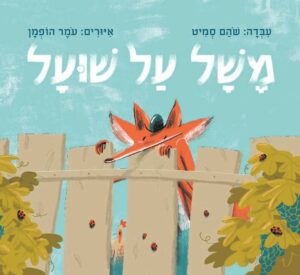
Discuss together the fox’s behavior: do you think it paid off? Was there some other course of action he might have taken, without going hungry and getting so thin — twice?
Flip through the book and ask your children to tell you the fable using only the pictures as a guide. Pay special attention to the details the illustrator added – for example, what is the fox dreaming about? What other animals appear in the pictures but not in the story?
The fox really wanted those grapes and was willing to go to tremendous lengths in order to reach them. You might talk with your children about something they might really want, and about what sort of effort they’d be willing to invest to obtain it. Do you know any other fables? The original story appeared in Midrash Kohelet Rabbah, and was included in Haim Nachman Bialik’s Book of Legends, which anthologized hundreds of fables from the Talmud and Midrash. You can find lots more fables and stories of our sages online: in Hebrew at http://agadastories.org , and in English at http://www.chabad.org/library/article_cdo/aid/112670/jewish/Fables-Parables.htm.
The fox “stars” in many tales and fables. You might discuss with your children the fox’s sly and clever nature. Do you know any other stories featuring a fox (for example, “The Fox and the Chickens” by Haim N. Bialik, or other fox fables)?
Your children may act out the story using a doll or stuffed animal. When the skit is finished, you can offer both actors and audience bunches of grapes for refreshment!
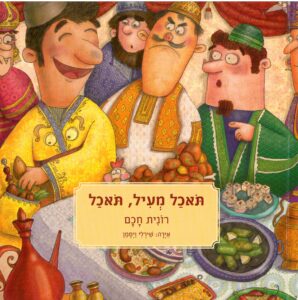
“Who is respected? Those who respect their fellow creatures” (Pirkei Avot 4:1).The wedding guests learn an important lesson from Marco about treating people with respect. In keeping with the saying “Don’t judge a book by its cover,” you could talk with your children about external and internal qualities. Together, you might discuss traits and characteristics of the different members of your family, emphasizing the importance of treating every person with respect regardless of how he or she looks or is dressed.
You might flip through the book together and compare the illustrations where Marco is simply dressed to those where he is wearing his elegant silk coat. Does “Marco remain Marco”?
While reading the story, you could linger over the page where Marco “feeds” his coat food from the wedding feast. Does this illustration make your children laugh? Do you find it funny? You could ask your children why they think Marco decided to put food in his coat pockets.
The story describes how the Jews of North Africa used to celebrate joyful life cycle occasions. You could talk with your children about weddings and other celebrations in your community today. How do you dress for them? What foods do you eat? Are there any special songs and dances associated with these events? Have your children ever taken part in a wedding or other life cycle celebration? See if you can find photographs from past happy occasions, and recall details from a wedding or other celebration in which you took part.
You could dramatize the tale using puppets or stuffed animals, or put on a skit based on the story. Make sure to find appropriate costumes: some ragged outfits, dark make-up, fancy wedding clothes, an elegant coat, and so on.
“When you eat the labor of your hands, you will be happy and it will be well with you” (Psalm 128:2). Marco works as a coal-seller—a job that barely paid enough to eat, and one that no longer exists. You could tell your children about coal, how people used to heat their homes with it, and how the job of coal-seller was regarded in society. Then you can ask your children what jobs or professions they know. If you like, you could tell them about the work that you do. What do you love about your work? What gives you satisfaction?
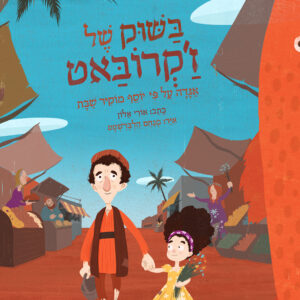
Talk with your children about the two protagonists in the story, Balthazar and Joseph, and compare them. Balthazar has much treasure at home but doesn’t share his wealth with others, whereas the impoverished Joseph is content with his lot in life and opens his home to guests on Shabbat.
You may want to discuss the difference between being “thrifty” and being “stingy” (both terms used in the story), and talk about the kind of generosity that doesn’t depend on having money.You might also discuss the concept of envy, and ask your children why they think Balthazar was so determined that his treasure not fall into Joseph’s hands.
Using simple props (you could make a precious “diamond” out of a crumpled ball of aluminum foil, and use a towel or scarf for a turban), you could dress up as the characters in the story and put on a family play. You could also use dolls, puppets, and stuffed animals to put on a show about this story.
Joseph’s daughter goes with him on his trip to the market. Where do you do your shopping – at a farmers’ market, or at the supermarket? A visit to a bustling farmers’ market can be an enjoyable adventure for young children. You could work together to write and illustrate ashopping list for Shabbat, and then look for them in the farmers’ stalls at the market, or at the store.
After reading the story, you can talk with your children about the way your own family celebrates Shabbat. What does your family do that is special? Who are your guests? You might work with your children to make an album of photos and drawings: “Our Shabbat,” featuring the people and things that make the Sabbath day special in your family.
Do you, like Joseph and his family, enjoy hosting or being a guest on Shabbat? Many children enjoy taking part in the preparations for entertaining guests into their home. They can make a “Welcome” sign and hang it on the front door, help set the table, help with kitchen chores, or decorate the table with special drawings for each place setting.
Many sources tell us about the unique character of Shabbat and the preparations for the day. Together, think of all the songs and stories you know about Shabbat (for example, “Who Loves Shabbat” by Ehud Manor; “Chanaleh and the Sabbath Dress” by Yitzchak Demiel; “The Missing Spice” arranged by Devorah Omer; etc.).
Do you know a different version of the “Joseph Who Treasures Shabbat” story? If you do, you can share it with your children and compare the differing versions.
The illustrations on the final pages of the book tell us, without words, what happens at the end of the story. Look at the illustrations together, and then use your ownwords to describe what happens after Joseph buys the big fish in honor of Shabbat. Notice the many figures that the illustrator added to the pictures throughout the story, and maybe invent a dialogue between these gossiping bystanders and Joseph.
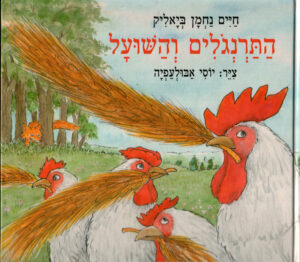
Follow the worm to tell the story: A little worm is hiding in the illustrations on each page of the book. It accompanies the flock of chickens on their journey to find food and watches what happens. Look for the worm. (You may give hints to children who have difficulty in finding it.)
You might want to use your finger as a “puppet” that talks to the worm about what it sees. You can even draw a little face on your finger and “befriend” the worm.
At the end of the story the chicken and the fox meet. Look at the illustrations that depict their encounter. Notice the facial expressions of the chicken and note what happens to the fox’s tail. Taking an idea from comics, cut out six “conversation balloons”. Using a bit of masking tape attach the “balloons” to the illustrations of the chicken and the fox. Inside each balloon write what the chicken said to the fox and what he answered her. (Parents: Use as little masking tape as possible in order to protect the book.)
We part from the brave chicken as she watches the fox run away. In the distance you can see the flock of chickens. They still don’t know that their little friend has saved their lives! It would be interesting to imagine what they do when they learn what occurred. You can act out the meeting between the wounded chicken and her friends by putting on a puppet show. You can make the puppets from cloth material, from boxes or from drawings cut out and pasted to wooden sticks. You can even include the “hidden worm” as the narrator of the story.
It is very difficult for the chicken to walk. She can’t even manage to hold a stalk of grain in her beak like the others. But when the fox threatens her, she turns her weakness into strength. This is her “hour”. Tell or draw a true or imagined story about someone who has his or her shining “hour”, an event that changes them from someone who is weak into someone who is strong.
The chicken has one weak leg. That’s why she needs the help of a crutch. Do you know a person or an animal that has a physical weakness? Discuss with your children what can help those who have trouble moving, hearing or seeing. Look for such examples in your neighborhood (special parking places designated for the handicapped, sign language for the deaf on news programs, floor numbers in an elevator embossed in Braille, etc.).
There are even special bills of money that are particularly suited for people who have difficultly in seeing. Look at two different bills of money of differing denominations. Close your eyes and feel the bills, and you will discover a protruding sign that helps people with poor vision “read” the bills and differentiate between them.
Throughout the story “The Chickens and the Fox”, Bialik provides hints to stories of our forefathers in the Bible:
The flock of chickens leaves its dwelling place during a year of drought and hunger and arrives at a place where there is food. Once they have satisfied their hunger, the leader gathers them together and asks them to quickly organize themselves for their journey homeward. They are going back to their coop. On their way home a fox lays in wait for them. Like Amalek, he doesn’t dare attack the main group of the flock, but aims instead at the weak straggler at the tail end of the camp.
As opposed to the fierce battle in the desert with Amalek, our chicken succeeds in frightening the fox. She does this by telling him that he who plans to harm the “tail of the camp” will lose his own tail. The fox is alarmed by this and flees, and thus the story ends with the chickens winning the day.
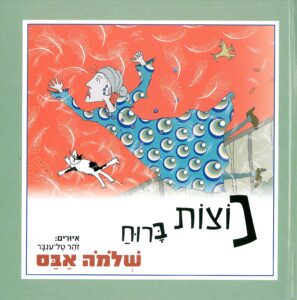
Feathers in the Wind is an ancient story passed from one generation to the next. Do you know any stories that are passed down in your family? You may want to remind each other of one or two such stories.
Things told “by word of mouth” can sometimes get distorted. “Chinese Whispers”, or “Telephone”, is a game that demonstrates this possibility in a humorous way: players form a circle, and the first player whispers a word in the second player’s ear. The second then whispers what they heard to the third, and so on, until the final player is reached, and asked to repeat the word out loud. Is it the same as the one whispered by the first player?
The woman in the story learned that it is not easy to mend her ways and take back the words she had said. You may like to discuss the following with your child: In your opinion, why did the woman gossip and spread rumors about the people of her town? Have you ever regretted anything you’d said, even as a joke? Perhaps you would like to discuss such incidents, and the steps you took following them.
What is the connection between words and feathers? You may want to ask your child: What do you think of the rabbi’s unusual suggestion, given without any direct preaching? Are there any life lessons in your family that are passed on in a creative, humorous fashion?
The verse “Guard your tongue from evil, and your lips from speaking guile” has a wonderful tune composed by Baruch Hayyat. If you know it, you may enjoy singing it together.
Shlomo Abbas has written and retold numerous stories. You may want to look for more of his books at home or the local library, and read them together. Which stories did you like?
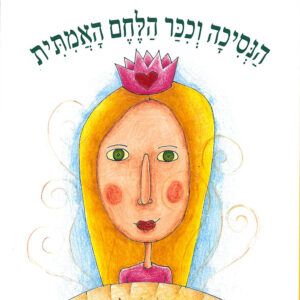
“Every loaf starts with a single grain”: You may want to ask your child how “bread is brought out of the ground”, which forces of nature helped the wheat and other ingredients grow, and what one needs in order to turn wheat into bread.
You could ask your child to think of five things they like to eat. Do they know what they are made of, and how they are prepared? You may want to make a “true meal” together, one that you make on your own from start to finish, including serving and clearing the table. Did you also feel satisfied with your effort and the entire process?
The princess did not want to disappoint her father, but hoped she could please him without making much of an effort. She ultimately overcame the difficulties she had encountered, and completed the task well. You may want to discuss the following with your child: Why do you think the king was unhappy with the ready-made loaves of bread brought to him by the princess? What is so special about the “true” loaf of bread? Have you ever been in a situation where you achieved something that was important to you after working hard, making a tremendous effort, or repeated attempts? You may want to share this experience and subsequent feelings with your child.
King Baguette looked at his princess’ hands to determine whether she had brought him the true loaf of bread. You could also look at your child’s hands, and try to guess what they had done today. Children’s hands resemble their parents’, but are also different. You may want to compare your hands, and notice the lines “drawn” on them. Do you have the same lines?
At the end of the story, the princess learned to appreciate the farmers’ hard work, and their contribution to her life, and even learned to thank them. Together with your child, you could think of the people around you who work hard to make everyone’s lives easier. You may want to try and count all the people who have helped us throughout the day (such as the people who clean the streets, security officers, bus drivers, those in building maintenance, etc.).
You might enjoy playing the “thank you game”. A family member starts by saying “I’d like to thank…” and tells of a good thing another has done for them. It could be anything, great or small, whether ongoing or a single incident. The next begins their sentence the same way, and ends it as they wish, and so on. You could have a thank you round at the dinner table, or before bedtime.
During the journey, the princess makes a loaf of bread, as well as a new friend! You may want to discuss the friendship between Fire and the princess together with your child, and compare it to the princess’ relationships with other characters in the book. Perhaps you’d enjoy telling your child about your friends, and share experiences with each other.
Stir the yeast in the lukewarm water until it dissolves, add the sugar, and let the mixture rise.
Place the flour and fermented yeast in a bowl, add the salt and olive oil, and knead into dough.
Cover and let the dough rise for approximately two hours.
Form rolls and place on an oven tray covered with parchment paper or corn flour (to keep them from sticking). Let them rise for another thirty minutes.
Bake in the oven for 25 to 30 minutes, at 220 degrees.
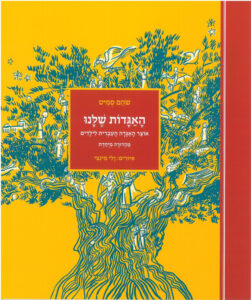
The characters described in the stories are often referred to as Our Rabbis, or in Hebrew, Hazal, which is an acronym for Hakhameinu Zikhronam Livrakha – Our Sages of Blessed Memory. After you have read the stories together, you may want to talk about sages and wisdom with your child. How do we classify a person as a “sage”? Who do we define as sages these days? Are we aware of different kinds of wisdom?
Were you already familiar with some of the stories included in this book? Perhaps you heard them as children, and would like to share with your child who told you these stories, and what you learned from them. Did you enjoy the stories?
Some stories have several versions. Are you familiar with any other version of the stories included in this book (found in Sefer HaAggadah, the Talmud or other sources)? You may want to look for these stories together, and compare them.
The legends of Our Rabbis and Midrashim have been passed down by Jewish communities from one generation to the next, whether in written form or orally. Do you have a story in your family that you heard from your grandfather or grandmother, one that has been passed down throughout the generations? You could continue this generation chain by telling it to your child.
You could ask your child which of the stories included in this book was their favorite. You may want to think of its significance in this day and age together. Which character do you identify with? How would you have reacted in a similar situation?
You may want to choose one of the stories and act it out. You could even look around the house for relevant costumes and accessories (fabrics, capes, pitchers, etc.).
Do you know any other story told about the characters featured in this book? This is a wonderful opportunity to equip your child with sayings and proverbs, as well as additional Hazal stories, and throw a “Proverbs and Stories of the Past” event. You may find the Aggadah stories for kids website helpful, or the full version of Shoham Smit’s book, A Treasury of Hebrew Legends for Children. You could also use other Hazal story collections, such as Yocheved Segal’s series entitled Ko Asu Hakhameinu, or Uri Orbach’s Hakhameinu Leyameinu.
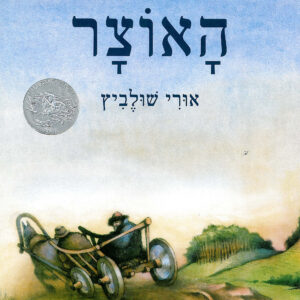
The illustrations by Uri Shulevitz remind us of a lifestyle from a different time and place. Talk about this with your children: If the story were to take place today, what would be different about the illustrations? You may want to prepare an illustrated booklet together of the same story, drawing pictures of the background and environment that is familiar to them today.
The tale doesn’t reveal what the treasure was that Yitzhak sought or why he had to leave his home on a journey that brought him right back to the place where he started. It would be interesting to discuss this with the children and to hear their thoughts on the subject.
This is an opportunity to share with your children the accomplishments that you have achieved after many efforts and great endeavor, and the sense of success that accompany these accomplishments. It is worth listening to their ambitions and dreams, too, and important that you encourage your children to try to realize them.
Your children are invited to lead you on a journey of hidden discovery throughout your home. Close your eyes or tie a handkerchief around your eyes, and let your children lead you to places and “treasures” hidden about the home that you didn’t even know existed. The children can also give you household items and objects to feel. Are you able to recognize what they are? At the end of the journey, trade places, and lead your children around the house.
Go on a treasure hunt – at home! You can hide a small “treasure” within the home. The children’s task is to look for it through the help of notes on which you have drawn hints and signs. The children will be happy to follow the hints that you have prepared, and to pass through different places in the home until they find the treasure.
“Sometimes a person has to walk a long distance in order to discover what was in fact right nearby”: Have you ever noticed your children’s joy in discovering the nice, familiar feeling of
home upon returning from a trip or a vacation? What are the “treasures” in each room of the home? What makes each one of you happy when you return home?
There are “treasures” in the vicinity of your home, too, that the children will be happy to discover and to collect. It would be fun to go on a “discovery excursion” in your neighborhood. You can select a suitable “treasure” together to bring home, and you may even want to dedicate a special corner of the children’s room to “treasures”.
“The Treasure” is the last book that will be distributed this year in the “Sifriyat Pijama” program. The school year is ending, and with it, your children will set off on a journey – whether they continue on to a new kindergarten or to school, or whether they remain in the same kindergarten and join the group of older children. This story reminds us that every journey brings with it a renewed appreciation of the treasure that is always with us, at home and within the family. Have a wonderful vacation from Sifriyat Pijama!
“Strange, what is happening here?” the beggar asks. You might want to stop the reading mid-way and allow the children to express their thoughts and opinions: What is happening in the town? Why does no one invite the beggar into their home? The children can take turns pretending to knock on the doors of the townspeople and ask them, “How are you? Why aren’t you opening the door to the beggar?” The children can invent different responses that the townspeople may give.
Young children should not open the door to a beggar, or to any stranger. In today’s world, we need to warn children against opening the door to strangers. What is the best way to help others? Discuss the ways in which we can help others without inviting them into our homes. Think together how and whom children can help.
After eating the soup, the townspeople sing, laugh, and dance. They even invite the beggar to sleep in their homes. Re-read the description of the townspeople together. What did the townspeople gain from their contribution to the soup that made them so happy? Try to think of a case when something new and better is created as a result of every person giving up something.
Draw or paint a community center (real or imaginary) on cardboard. Cut the picture to create a jigsaw puzzle, which can then be put together. Show the children how each piece of the puzzle helps complete the picture.
Prepare Bone Button Borscht with friends (but without the buttons!): You might want to divide the kindergarten children into groups of three or four, each of which would prepare soup at the home of a different child. Ask each group to write and illustrate their soup’s recipe, and compile a classroom soup cookbook.
Prepare soup in the classroom: Ask each child to bring in a vegetable or a spice, to ensure that everyone takes part in contributing to the group effort of preparing the soup. The recipe of the soup prepared in kindergarten can be the first one to appear in the kindergarten’s cookbook described in the previous activity suggestion!
In order to bring the abstract concept of a “community” closer to the children, start with the joys of being a part of our kindergarten community:Who is a part of it? What do we like to do together? What do we do together that we can’t do alone? What special or added value do we achieve by being a community as opposed to each person being alone in his or her home? What other thoughts do you have on the topic?
One idea for solidifying the feeling of community is to sing with the children the song “HinehMah Tov U’MahNa’im, ShevetAchim Gam Yachad” (How goodly and pleasant it is for brothers/friends to sit together).
Community institutions: Suggest to the parents that they take a walk with their children in the neighborhood in order to take specific note of the community institutions in it (community center, library, school, synagogue, etc.), and afterwards to draw these buildings. Ask the children to bring their drawings to the kindergarten. By hanging the children’s pictures on the wall, you can create a model of the actual community and its institutions, or even an imaginary community. Or, you may want to build a model of such a community by using blocks, Lego or some other construction material.
What can five buttons achieve? Divide the children into two groups. One group draws a collective picture of the darkened town (houses, inhabitants) as it was when the beggar arrived in the beginning of the story, while the other group draws pictures of the town after the people ate the soup together. You can hang the two pictures on a bulletin board on the wall in order to emphasize the change.
“Receive everyone with a kindly countenance” [Haveimikabel et kul ha-adamb’severpanimyafot(Avot, 1)]: At an in-service-training workshop, “Tali” kindergarten teachers discussed the difference between “Bone Button Borscht”, and Jewish tales that deal with the importance of receiving people with a kindly countenance and the mitzvot of welcoming guests (hachnasatorchim). The behavior of the townspeople in Bone Button Borscht demonstrates the exact opposite of welcoming guests and of “receiving everyone with a kindly countenance”.
Receiving guests is one of the most important and beloved mitzvot of the Jewish tradition. In the Book of Genesis (ch. 18), it is told how Abraham welcomes three strangers, feeds them, and invites them to stay as guests in his tent. Abraham’s behavior teaches us how we should behave in our homes.
During the holiday of Sukkot it is customary to invite guests (“Ushpezin”), and for people to visit one another in their sukkot. And each year on Passover we invite guests to a meal and read: “Koldichfin yeti v’yachol, kolditzrich yeti v’yifsach” (Every hungry person may come and eat, every one who is in need may come and observe). We invite others to come and eat with us, in order that no one remains outside, hungry and alone on the Seder night.
You can share with the children the tale relating that in the tents of Abraham, our forefather, the first Jew, there were four openings. Each opening opened out to a different direction in order that every guest, no matter where he came from, would feel comfortable to enter.
How do we host a friend? What is the duty of the host or hostess, and what is the duty of the guest? Accepting guests is part of the everyday life of children, but sometimes it’s difficult for them to host because they don’t know what to do with the guest, or because it is difficult for them to share their possessions. You can take such an opportunity for discussing the ways in which to make the guest feel comfortable.
The mitzvah of welcoming guests is most meaningful when inviting one who is needy. You can carry out a “campaign” in the kindergarten in which every child invites a new friend, someone who has not yet visited him or her at their home. This is an excellent opportunity for creating new connections between children, and to help children who have difficulties with social skills.
“Bone Button Borscht” is distributed in the month of Adar. Purim is approaching, and with it, mitzvot that are directly connected to community action and to helping the needy – mishloachmanot and gifts for the needy. As a class you can prepare mishloachmanot for all members who serve the community (security guards, the kindergarten staff that works in the after-school/afternoon program, etc.). You might also organize gifts for the needy. Your classroom community can collect and organize food, games or any other useful items that come to your mind that could gladden the hearts of those who in need.
You may like to look at the illustrations together, where many details appear that are not mentioned in the story. What do the siblings like to do while their father works in the field? What are the animals in the story doing? Perhaps you’d like to find the illustration where the father tells them he does not remember where the treasure is buried. What do the children imagine finding there? You may want to ask your own child what they regard as a “treasure” and what they might have hoped to find in the field, had they been promised a treasure.
Your child can work the land, even at home! Together you may enjoy making seeds sprout, or planting bulbs, avocado pits or potatoes, whether in a flowerpot or in the ground. Water it, look after it, follow its growth. It requires effort and cooperation, just like in the story – maybe in the end you’ll grow a “treasure” too?
A treasure at home! You may want to suggest that your child make their own treasure chest. You could hide the treasure in a room in the house and play “treasure hunt”. Draw illustrated notes with clues on them and help your child get closer to the hidden treasure from one note to the next.
The farmer’s three children work together, and each one makes suggestions and comes up with good ideas. Perhaps you’d like to talk about the different roles in your family: what is each family member good at?
“He who works his land shall have plenty of bread” (Proverbs 28:19): In the field the brothers plough, sow, reap… in Hebrew there are many words that describe farming! You may like to look at the illustrations, and identify together which action is being performed in each one and compare the tools, then and now.
The story depicts the changing seasons: Does your child know which season is most suitable for sowing and harvesting? Which is yours and your child’s favorite season, and why? Perhaps you’d like to suggest that your child draw a picture depicting themselves in their favorite season.
You may enjoy looking at the illustrations and looking for other funny things about Chełm. Have you noticed the square wheeled bicycle? Try to guess why the lady sitting on the bench is hiding under an umbrella.
Did you find this story funny? Do you know other stories about the people of Chełm, or tales about Hershele and Juha? You may want to read them together, or simply tell each other jokes.
Perhaps you’d like to look out the window and search for the moon. What does it look like? You could draw the moon you saw, and hang the drawing by the window. Then return to the window and look at the moon again several nights later – does the moon look any different?
You may enjoy taking a nocturnal walk together. Does your street look any different at night? What do you see? What sounds do you hear? You could look up at the sky, search for the moon, be reminded of the people of Chełm, and laugh…
The north wind and the sun are depicted in the first illustrations of the book. Each one was given different colors. Which colors were used for the sun? Which for the north wind?
It is difficult to see the wind, but its impact can be felt. You may want to look through the special illustrations of the book together, and look for signs that the wind is blowing. While you are reading the story, is the wind blowing outside? Take a look through the window. Can you “see” the wind?
You may enjoy playing dress-up and acting the story out to your family and friends. What do you think the facial expressions of the north wind and the sun would be like? What voices would they have?
At times, in an effort to get what we want, we too might behave like the north wind; and other times we might behave like the sun. What do we look like in “north wind mode”? What do we look like in “sun mode?”
Can you draw a large, joyful sun together, and hang it up so it would remind us to be kind? You may want to write pleasant, heartwarming words next to each of the sun’s rays on your drawing.
You may enjoy exploring the wind’s impact on different objects together: on the table place a sheet of paper, a stone, a leaf, some cotton-wool, and a spoon. Try to blow on them and move them – which one blew away easily? Which one was impossible to move?
Is it always pleasant in the sunshine and unpleasant in the cold? Which type of weather does each of you prefer? What do we like to do out in the sun, and what do we enjoy when it’s cold out?
The North Wind and the Sun is a fable. Do you know others? You may like to read them together.



 A Good Name
 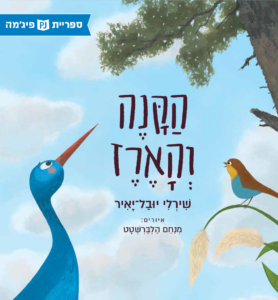 The Reed and the Cedar
 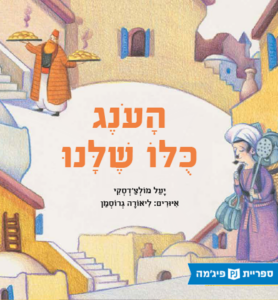 The Peddler and the Baker (Literally in Hebrew: Pleasure’s All Ours)
 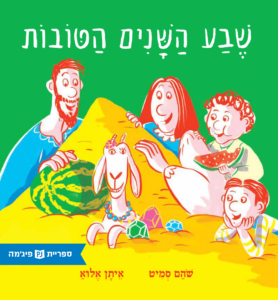 Seven Good Years
 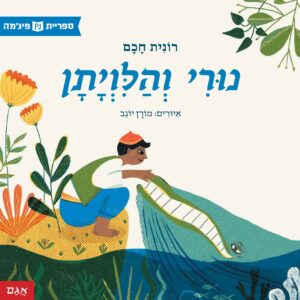 Nuri and the Whale
  The Lion and the Bone
  Joseph from Chełm goes to Warsaw
  Dragonsticks
  A Tale of Three Nuts
  It’s Crowded at Home
  Tales of Wisdom
  The King’s Golden Shoes
  Grandfather, Grandson and a Donkey
  Vineyard
  Eat, Coat, Eat!
  In the Market of Zhakrobat
  THE CHICKENS AND THE FOX
  Feathers in the wind
  The Princess and the True Loaf of Bread
  A Treasury of Hebrew Legends for Children
  The Treasure
 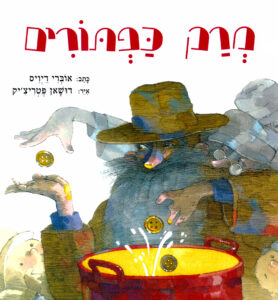 Bone Button Borscht
 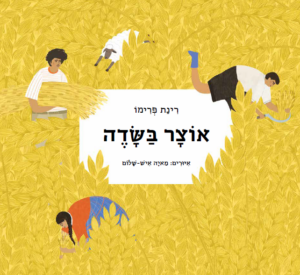 A Treasure in the Field
 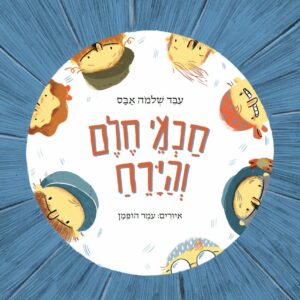 The People of Chełm and the Moon
 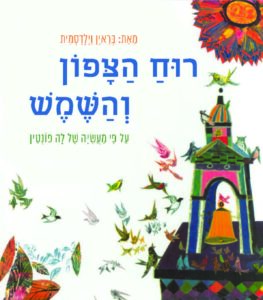 The North Wind and the Sun